


|
Here is a living log of development, testing, critique, independent verification, and gradual evolution of the Twizy with ASPP motor. This is for everyone who is genuinely interested in long‑term technology testing. It is also my own test, because I had to convince myself that this technology works, rather than taking everything on faith from theoretical expositions. Link to the original forum: Full discussion thread of the Twizy Forum — “100 km – das ist kein Scherz mehr” What is especially important: The most valuable thing is that the forum was not an advertising platform. On the contrary, at the beginning I was checked quite rigorously. One of the moderators directly questioned the 100 km result and demanded an explanation of the effect of battery temperature, driving conditions, speed, power, and battery state‑of‑health.
And this is precisely why the subsequent history is much more convincing: Claim → criticism → measurement → independent data → real‑world testing → re‑testing → community confirmation. This already looks like a genuine engineering development process. |
1. Starting point — April 2017On 7 April 2017 you open the topic with a very simple wording: “100 km – das ist kein Scherz mehr” (“100 km – that's no joke anymore”). In my first post I report that we bought a five‑year‑old Twizy only three weeks earlier, not for fun, but for an experiment. The first result was stated as about 100 km range after changing the motor. Clarifications:
The experiment started with the motor, not with a larger‑capacity battery.
|
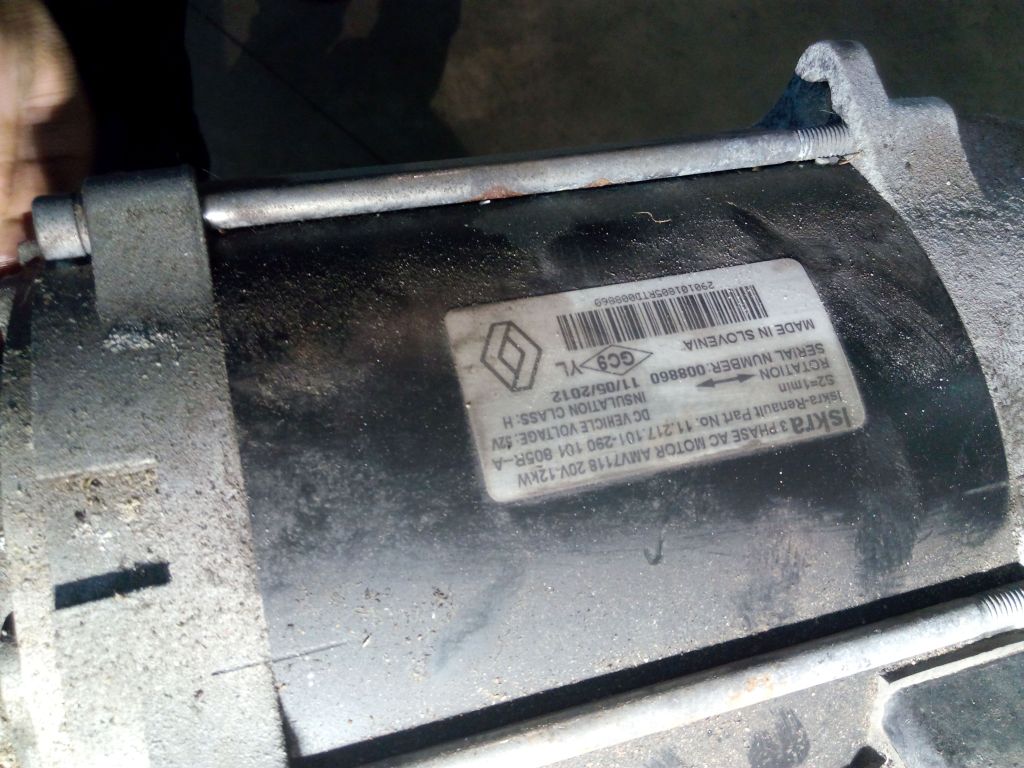
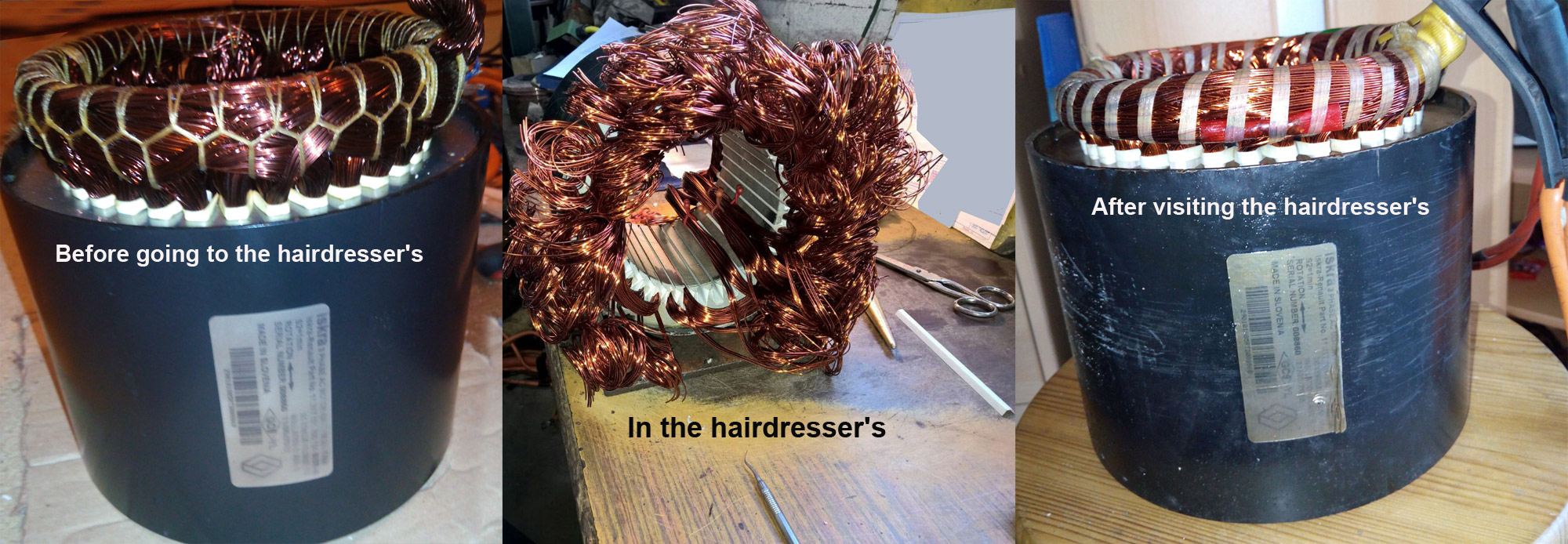
2. First trial — “Prove it”And here the real interesting part begins. Forum members did not take the claim at face value. They asked clear questions:
One member even proposed a comparative trip of two Twizys. This is very important to preserve on the site: Trust in the project was gained through technical skepticism, not marketing statements.
|
3. What exactly was changedFrom the discussion it becomes clear that it was not just “rewinding”. You explain:
Particularly interesting is the comment: "The motor was not simply rewound to six poles." You linked the result to several factors: change in pole count, combined winding, change in magnetic field, reduction of losses, and reduction of harmonic components. Later you explicitly describe four components: reduction of harmonic fields, reduction of vibration/noise/torque pulsation, reduction of copper losses and iron losses.
|
4. A very important finding: the motor did not simply become “weaker”This was one of the main questions on the forum. Members assumed that you had possibly sacrificed power for economy. But you reply that the motor did not become weaker, and the pole change was part of the optimisation. Moreover, the temperature after tests remained significantly lower than expected: you reported about 50–60°C, and later after a trip about 40–45°C. And this is already a different engineering metric: Same vehicle + same battery + different electromagnetic characteristics of the motor.
|
5. The forum became a test laboratoryThis is perhaps one of the strongest moments of the whole story. Forum members did not just discuss your experiment — they began to help measure it. Particularly important is the member Dexter. When you requested data for the original configuration, he independently conducted a measurement run and provided telemetry data. The discussion explicitly states that the data included: motor current, motor voltage, battery power, slip, acceleration, GPS data, trip data (tables rt‑eng‑sdo and rt‑gps‑log). From these data the figure was calculated: 54.8 Wh/km and theoretical range: 103.1 km.
This is no longer a Twizy dashboard indication — it is an independent analysis of driving data.
|
6. Very important data honestyDexter noted that the GPS antenna placement was not good enough and therefore altitude data were unreliable; the actual terrain on the test section near Bonn was significantly smaller than the GPS chart showed. This actually reinforces confidence in the material. We should not show only convenient data: During the testing process, limitations related to measurements were also recorded. The altitude data obtained via GPS were deemed unreliable because of antenna placement and therefore were not used as a determining parameter in the comparison.
|
7. Monaco — independent real‑world testingThen Monaco appears. I had suggested in advance to the participants: test the vehicle yourselves. At the exhibition in Monaco I happened to be next to a company that rented out Twizys. After the employees tested the car themselves, the manager of the company was able to let customers first drive a standard Twizy and then mine. And people noted differences not only in acceleration, but also in consumption and regeneration. With the same driving profile and about 50% battery:
• Original Twizy: 39–40 km indicated range • Modified Twizy: 50–51 km indicated range
|
8. Driving in the mountains / MonacoEven stronger is the subsequent real trip on a mountain route: La Turbie → Nice → Monaco plus heavy traffic in Monaco itself. After the trip:
So this is no longer a test bench – real roads + elevation changes + traffic + acceleration + regeneration + real battery.
|
9. The position of the independent tester changedIt is very interesting to follow the psychological evolution of the forum: At the beginning: “I don't believe these efficiency values.” And later a completely different comment appears: one member writes that he previously considered it unlikely to significantly change the characteristics just by changing the winding, but after your data he takes it seriously and wishes further success. |
10. The most important scientific discussionPerhaps the most important part of the thread is the discussion not just of efficiency, but of “dynamic operating efficiency”. Dexter analyses the published data of the motor + reduction gear and notes that the standard system has a comparatively narrow efficient range: during acceleration 30→50 km/h the motor operates in the region of about 86–87% total efficiency of motor and gearbox, and at low current at constant speed the efficiency drops even lower. The real question is not only the peak efficiency of the motor, but also how efficiently the motor works in an ever‑changing driving cycle.
Conventional efficiency measurements are often performed at steady speed and load, while a real motor constantly operates in transient regimes.
|
11. Another very strong result — torqueAnother interesting result appears in the discussion. A calculation is given: 83 Nm instead of 55 Nm at the same current — i.e. about +50% starting torque at a comparable current.
This ties in very well with what puts emphasis on the development of technology for pumping stations and ventilation systems: dynamic response matters. Not just steady‑state efficiency. |
12. The project already became a platformA very important phrase in the thread: “And it is not just about the Twizy.” I explain that the Twizy was a convenient experimental platform, while the technology was intended for much broader applications. There appears an example of the Smart: a smaller motor with the modified technology showed higher traction characteristics at significantly lower current compared to a more powerful standard configuration. And this already is: Twizy → Smart → Kangoo → industrial electric motors → wheel motors.
|
13. The human aspect — it was a community projectThe member “Dingdong” describes in detail the meeting in Wachtberg. He writes that he promised to help me with Twizy matters, handed over a motor, participated in the meeting and tests. He also writes directly that the ride in your Twizy and motorcycle made him “absolutely thrilled” — i.e. very impressed. Another member offers to provide a car for long‑term testing. Yet another writes: “Respect and gratitude for all the work done…” and considers a possible own project of electrifying a car. This is evidence that the technology aroused independent interest among technically savvy users.
|