| First Steps: How Dynamometer Tests Confirmed the Future of Our Technology |
| The story of how test curves from the University of Bologna turned theoretical winding calculations into proven performance. |
| When developing or adopting a new technology, theoretical calculations only take you so far. The defining moment comes when real-world dynamometer data either validates your vision or breaks it. |
| For me, that turning point came when comparing test results from the University of Bologna with our own rewound motor technology. It was the moment all doubts vanished: the technology was not only viable, but carried immense commercial potential. |
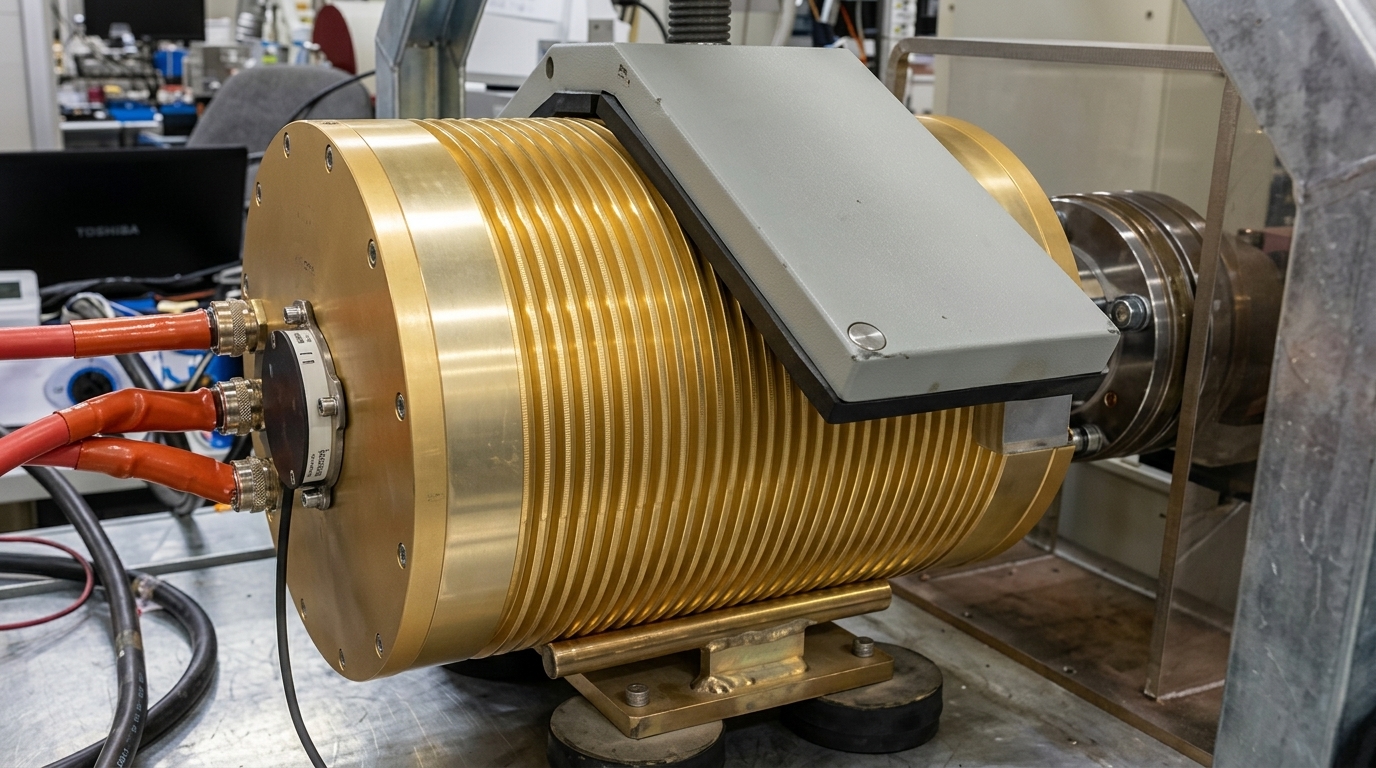
Fig 1. Baseline OEM Motor (54 kg)
A heavily engineered 54 kg motor featuring a copper rotor and custom drive controller. The photo also shows the size comparison via the mounting flange and protective frame. |
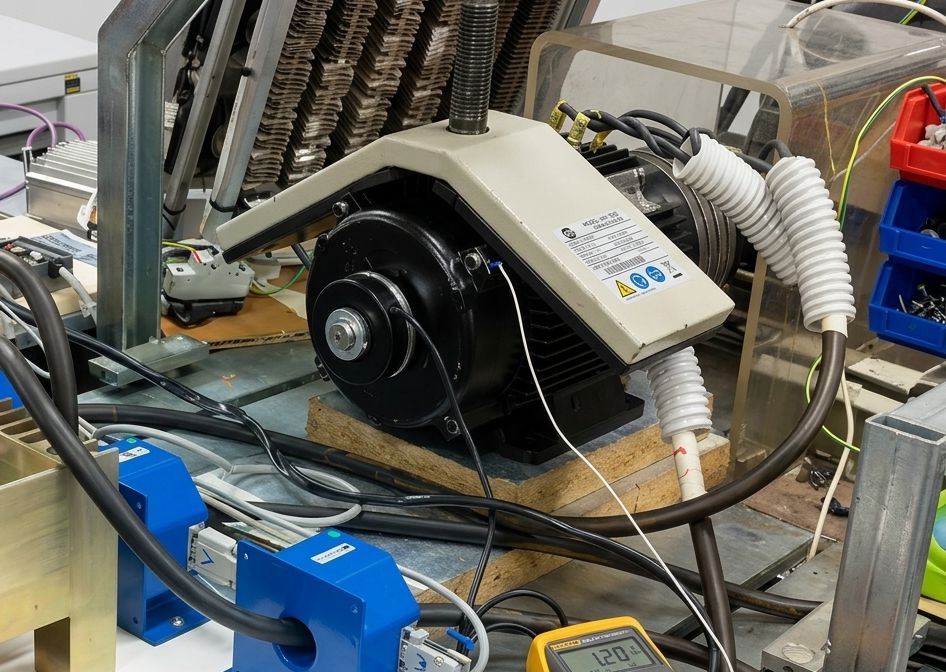
Fig 2. Tested AEG Motor (27 kg)
A standard 3 kW off-the-shelf motor with manufacturing imperfections, rewound with combined windings. |
|
| Baseline Setup: Heavyweight OEM vs. Rewound Industrial Unit |
| To understand the significance of the test, consider the stark contrast between the two competing motors: |
|
Baseline OEM Motor
• Weight: 54 kg (2x heavier)
• Build: Copper rotor, custom-tuned VFD
• Claimed Peak: 130 Nm torque
|
|
Our Motor (Combined Winding)
• Weight: 27 kg (standard industrial)
• Condition: Used, rotor skew alignment flaws
• Modification: Stator rewind only
|
|
| What the Bologna Test Curves Revealed |
| When analyzing pages 3 and 4 of the University of Bologna test report against our dynamometer data, the dynamic torque curves revealed an unexpected result: |
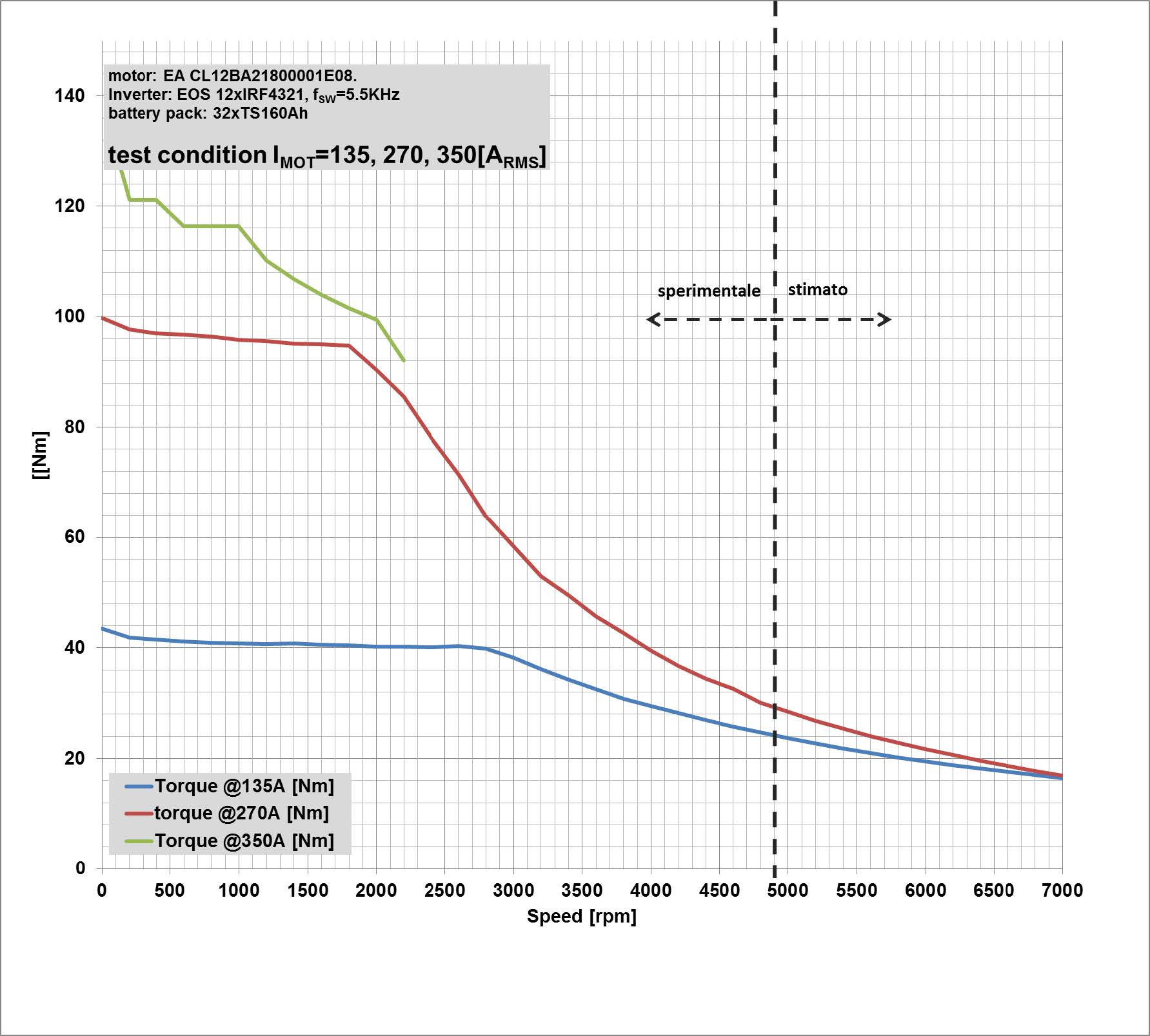
Fig 3. OEM Torque Curve Drop-off
Rapid torque degradation of the 54 kg OEM motor as rotational speed increased. |
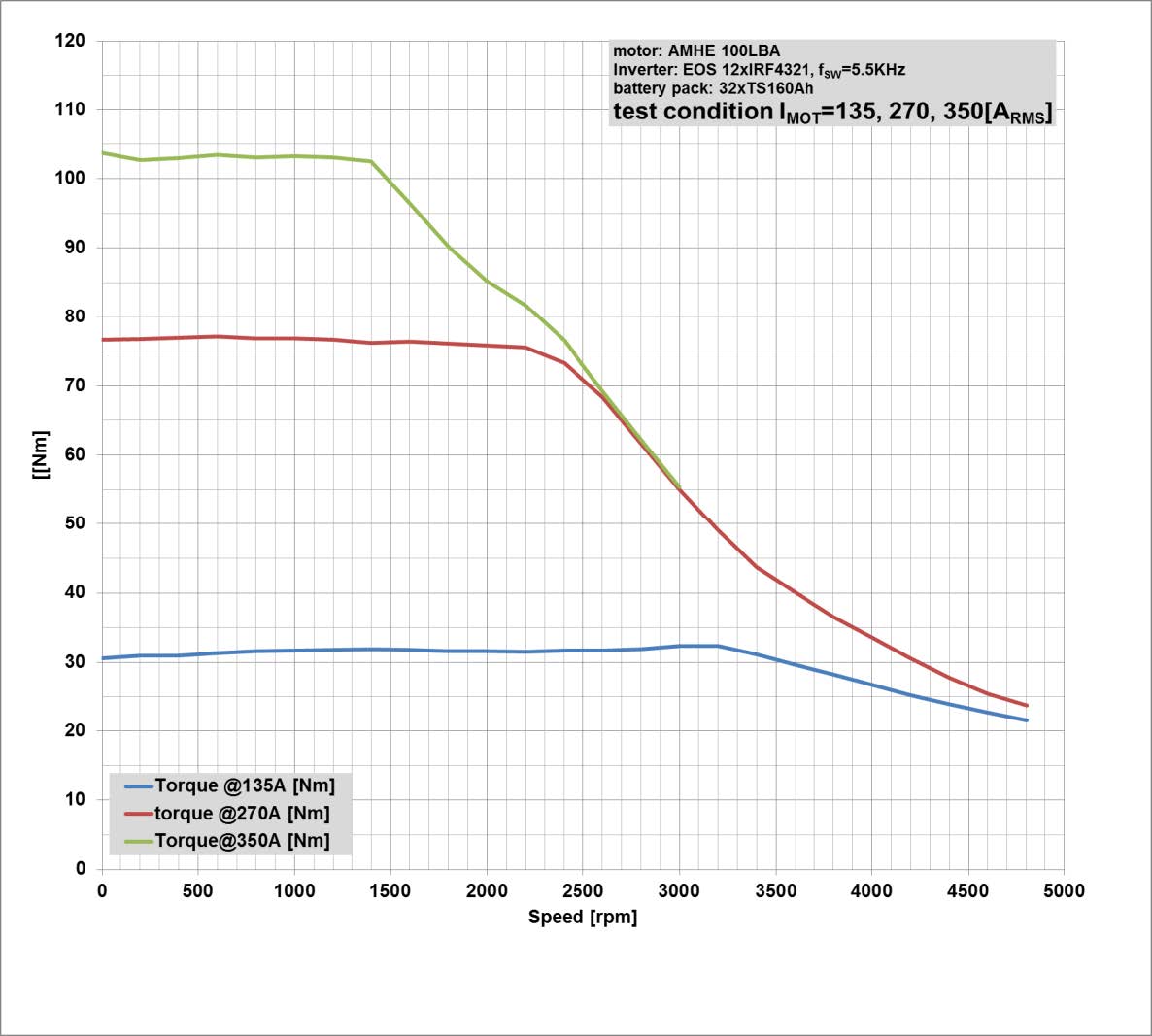
Fig 4. Speed Convergence
Torque output of the 27 kg rewound motor matching the 54 kg motor past 2,000 RPM. |
|
- Torque Drop-Off in Dedicated OEM Setup: The 54 kg motor's rated peak torque of 130 Nm degraded rapidly as soon as rotation began, suffering a steep decline early in the RPM range.
- High-RPM Convergence: By the time both motors reached 2,000 RPM, the torque output of the heavy, high-spec OEM motor plummeted to match the output of our lightweight 27 kg rewound motor.
|
| Key Insight: Achieving high initial performance with a clean-sheet design where the motor and drive are custom-built at great expense is one thing. Achieving equal operational performance using an off-the-shelf industrial motor—rewound with combined windings despite structural imperfections—is proof of superior underlying electromagnetics. |
| Why This Validated Our Path |
| Seeing a 27 kg motor hold its ground against a 54 kg copper-rotor motor past 2,000 RPM demonstrated that the primary performance advantage lies in the electromagnetic efficiency of the winding configuration itself, rather than raw material mass or expensive custom drives. |
| These test graphs provided definitive proof: combined winding technology was not just a successful experiment, but a transformative breakthrough ready for commercial deployment. |
|
|